
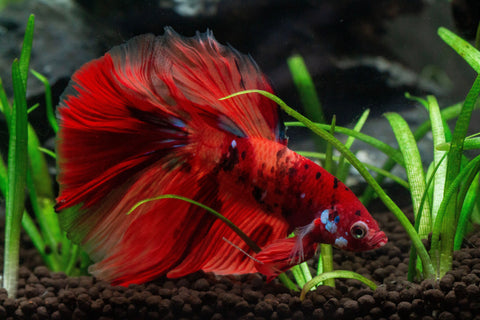
Betta fish (Betta splendens), often called "Siamese Fighting Fish", are among the most recognizable and popular freshwater fish in the aquarium hobby. Native to Southeast Asia, these colorful fish have been kept and selectively bred in the hobby for hundreds of years. Originally bred in Thailand for their aggressive behavior and use in organized fish fights, modern bettas have been selectively bred for an incredible variety of colors, patterns, and fin types.
Over the last decade, bettas have seen a surge in popularity, and a significant expansion in the range of colors, patterns and tail types through selective breeding. We have also gained a much better understanding of bettas biological needs, and care standards have improved significantly as a result. Bettas were once commonly marketed as low-maintenance pets that could thrive in bowls or small containers, but we now know these setups do not provide the space, stable water conditions, or enrichment they need to thrive. With proper care, a betta can be an active, personable, and interactive pet fish that can live for several years.
Species Information and Overview
Scientific Name: Betta splendens
Common Name: Betta Fish, Siamese Fighting Fish
|
Minimum Tank Size |
5 gallons |
|
Water Temp |
77-82 F |
|
Diet |
Carnivore |
|
Temperament |
Aggressive |
|
Lifespan |
3-5 Years |
Social Behavior
Bettas are solitary and territorial fish. Male bettas should never be housed together due to their aggressive nature. Research suggests female bettas appear to establish social hierarchies and show individual social preferences. Because of this female bettas can sometimes be kept in groups called sororities, but these are advanced setups that require careful planning and monitoring, so they are best left to dedicated hobbyists and more advanced keepers. Bettas do not get lonely or stressed being the only fish in a tank, and do not need other fish unlike schooling or shoaling species.
Diet
Betta fish are obligate carnivores, so they require a diet with lots of protein. Feeding a variety of foods is recommended, from prepared foods like flake or pellets to readily available frozen foods or even live foods. When selecting a dry food, go for a pellets or flake with at high protein content and named animal protein sources as the first ingredients. We recommend the Omega One Betta Buffet Pellets or Flakes. Frozen brine shrimp and bloodworms are great foods to add variation to their diet and are easily found at local fish stores and chain pet stores. Live foods such as daphnia, blackworms and flightless fruit flies are other great options offering enrichment as well as nutrition.
Adult bettas should be fed 1-2 times a day. Feeding amounts will vary depending on the type of food being offered. Food packaging recommendations can vary, so adjust portions based on your betta's needs. Avoid overfeeding, as too much food can cause digestive issues and poor water quality. If your betta's stomach appears bloated, reduce feeding amounts.
Native Region
Fancy/Domestic bettas do not have a native range. They exist through selective breeding in captivity over many generations. While they are considered Betta splendens, they are genetically a hybrid of many species within the splendens complex including imbellis, mahachaiensis, and smaragdina. Their wild counterparts are native to Thailand, Cambodia, Laos, Vietnam, and neighboring regions of Southeast Asia.
Conservation Status
Not currently listed as endangered, though many wild species and populations face pressure from habitat loss, development, pollution, and even competition from pet bettas being released into wild habitats.
Aquarium Setup
When it comes to choosing a tank for your betta, you should have at least 5 gallons. This provides enough room for your betta to swim and explore while also helping maintain proper water conditions. If it is your first tank, I would recommend choosing a larger tank, such as 10 gallons. Larger tanks are generally easier to maintain and have more room for error (and other fish!). You also want to be sure you have a tank lid. Lids not only reduce evaporation, but they also prevent bettas from jumping out of the tank. Bettas should not be kept together in the same tank. A divided tank can be done if the dividers are secure and opaque such as the Life With Pets betta tank dividers.
Heater/Tank Temperature
Bettas are tropical fish, and therefore, require a heater in their tanks. Bettas thrive at temperatures from 78-80 degrees F. Maintaining a stable temperature is important because temperature swings can cause stress and negatively affect your betta's health. A 50 watt adjustable heater paired with a thermometer is a great choice for your 5-10 gallon tank. This setup allows you to monitor water temperature and make changes if needed.
Filtration
Bettas require a filter in their tanks just like any other fish. Filters help remove debris and house beneficial bacteria that help maintain healthy water conditions. Betta fish also need a tank with low flow, as strong currents can cause stress and make swimming difficult. Sponge filters are a great option since they inherently have very low flow. Sponge filters are harder to find at chain pet stores, but a hang on the back filter can also be used. You can also make a DIY baffle to lower the flow on any hang on the back filter.
Substrate and Décor
It's time to make the tank your own! You have lots of choices when it comes to substrate and décor for your betta tank. Any sort of sand, gravel, or planted tank soil is a great substrate option. When it comes to décor, choose non-sharp aquarium safe items and avoid small openings where your betta could become stuck. Some plastic plants may harm your betta's fins, making silk or real plants safer options. Bettas enjoy spending time near the surface and like resting spots such as plant leaves, floating betta logs, and betta hammocks that attach near the surface. Make sure to provide lots of cover and hides to make your betta feel safe in their home.
Tank Mates
Bettas should not be kept in the same tank as one another. They are aggressive and if kept together can result in fin damage, stress, illness, and even loss of one or both fish. As a general rule, you should stick to one male or female betta per aquarium. Larger groups of female bettas can sometimes be kept together in something called a “sorority tank". This is a more advanced setup due to the specific tank setup requirements and experience needed for success.
Bettas are considered to be intraspecies aggressive, meaning they mainly are aggressive towards other bettas and things they perceive as bettas. Because of this, bettas can actually be great centerpiece fish in community tanks. When housing bettas with other fish, choose a tank 10 gallons or larger. The success with tank mates is dependent on the individual betta and their personality, therefore, having a backup tank and knowing signs of aggression is recommended. While most bettas don't have issues being housed with other fish, some individuals can show stress with fast moving species or become territorial and aggressive on rare occasions.
When selecting community fish, choose non-aggressive fish that are not know to be fin-nippers. Avoid long flowing fins as such as male guppies as they are more likely to become victims of aggression. Also be sure they are temperature and water parameter compatible so they can live comfortably in the chosen tank size and conditions. Popular choices include Celestial Pearl Danios, Pygmy Corys, and Ember Tetras.
As a general rule avoid any other anabantoids like gourami or paradise fish. While small species like honey gourami are very peaceful and rarely cause an issue, many of these species are considered semi-aggressive and can clash with a betta in a community setup. Sticking to peaceful schooling or bottom dwelling fish tends to lead to the best outcomes.
Setting up Your Tank - Aquarium Nitrogen Cycle
Making sure your tank is cycled is essential for the health of any aquatic life. Once your tank is setup with your filter, heater, decor, and water, there's one more crucial step to making sure you have a suitable environment for fish. Establishing a colony of nitrifying bacteria is essential for turning the toxic fish waste (ammonia) that would otherwise harm your fish into plant food (nitrate). Here are some resources to learn more about the nitrogen cycle and how to cycle a fish tank!
Tank Maintenance
Once you have your betta tank set up, you will need to do regular maintenance to keep the tank healthy for your fish. Water changes of 10-50% (depending on tank size, stocking, amount of plants) weekly are recommended. Gravel vacuuming can help remove debris from the substrate.
Never use soap or other cleaning chemicals when maintaining your tank, as the residue can be harmful to your fish. Also avoid rinsing substrate, decor, and the filter under tap water, as beneficial bacteria live on these surfaces and can be harmed by untreated tap water. If cleaning is needed, use old tank water removed during a water change instead.
Signs of Stress and Illness
Changes in your betta's behavior or appearance can sometimes be a sign that something is wrong. Some common signs to watch out for include loss of appetite, lethargy, clamped fins, torn fins, fading color, rapid breathing, unusual swimming behavior, white spots, or hiding more than normal. Water quality can play a major role in your betta's health, making regular maintenance important. Catching potential issues early can make a big difference and help your betta get back to feeling their best!
Comments (1)
When do you get in a new stock of Bettas.