
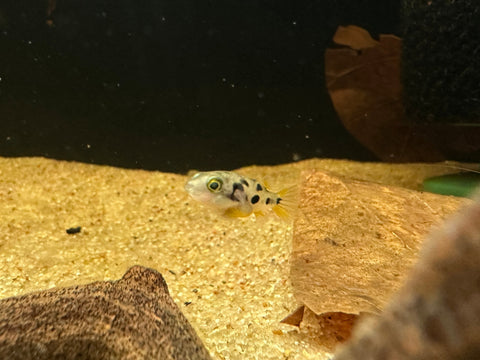
Species Information and Overview
Pea Puffers (Carinotetraodon travancoricus), also called Malabar Puffers, are tiny freshwater puffers known for their bold personalities and curious behavior. Despite their small size, they are active, intelligent fish that do best in heavily planted aquariums with lots of cover and a carefully managed diet.
Scientific Name: Carinotetraodon travancoricus
Common Name: Pea Puffer, Malabar Puffer
|
Minimum Tank Size |
5 gallons |
|
Diet |
Carnivore |
|
Temperament |
Aggressive |
|
Max Size |
1" |
|
Lifespan |
3-6 Years |
|
Native Region |
Kerala, India |
|
Conservation Status |
Vulnerable |
Natural Habitat
In the wild, pea puffers are found in slow moving or still waters with dense plant growth. Their natural habitat is full of cover, which helps them feel secure and reduces stress.
Social Behavior
Pea puffers are social, but they are not peaceful community fish. They form loose groups and create a social hierarchy, which can lead to chasing or bullying, especially in tanks that are too small or too bare. They generally do best in groups with plenty of plants and broken sight lines so weaker fish can get away from dominant ones. If keeping multiple pea puffers, it is best to keep more females than males to reduce stress and aggression.
Diet
Pea puffers are carnivores and should be fed a varied diet of live or frozen foods. Good options include brine shrimp, daphnia, blackworms, and small snails. Snails are especially important because they help wear down the puffer’s constantly growing teeth. Bloodworms are often accepted eagerly, but they should be used as an occasional treat rather than a staple food. Most pea puffers do not reliably accept dry foods.
Aquarium Setup
Pea puffers do best in aquariums that mimic their natural environment. A heavily planted tank is highly recommended, with lots of hiding spots and visual barriers to reduce aggression. Floating plants can also help them feel more secure. Sand is a good substrate choice because it is gentle and reduces the chance of injury if a fish darts into the bottom when startled.
Water flow should be kept low, as pea puffers are not strong swimmers. Sponge filters work very well for this species, and hang-on-back filters may need a baffle if the current is too strong. A tight-fitting lid is also recommended, since startled puffers may jump.
Aquarium Size
A single pea puffer can be kept in a 5 gallon aquarium, but groups are generally more active and display more natural behavior. For groups, plan for at least 3 gallons per fish. A 10 gallon tank can work for a small group of 3, while a 20 gallon long is a much better option for larger groups. Long tanks are preferred over tall tanks because the extra horizontal swimming space gives them more room to establish territory and avoid one another.
Water Parameters
| Tempertature |
72-82 |
| pH |
6.8-8.0 |
Pea puffers are sensitive to unstable or dirty water, so regular maintenance and water changes are important. Clean, stable water is one of the biggest factors in keeping them healthy long term.
Community Compatibility
We generally do not recommend keeping pea puffers in a community aquarium. They are known for nipping and territorial behavior, and even fish that seem compatible can still be harassed. In very large, heavily planted setups with a bigger group of pea puffers, some keepers have had success with small, fast tankmates such as loaches, rasboras or danios, but this is never guaranteed. Anyone attempting a community setup should be prepared to separate fish if problems start.
Breeding
Pea puffers are egg scatterers and usually spawn in plants or moss. Breeding is most often done with one male and multiple females to reduce aggression and keep a single female from being over-harassed. A breeding tank should have warm, clean water, gentle filtration, and plenty of plant cover.
Once eggs are laid, they are best moved to a separate rearing setup so they can be protected and monitored more easily. After hatching, the fry should be offered very small foods such as microworms or baby brine shrimp until they are large enough for bigger foods.
Comments (0)
There are no comments for this article. Be the first one to leave a message!